.webp)
.webp)
February 17, 2026
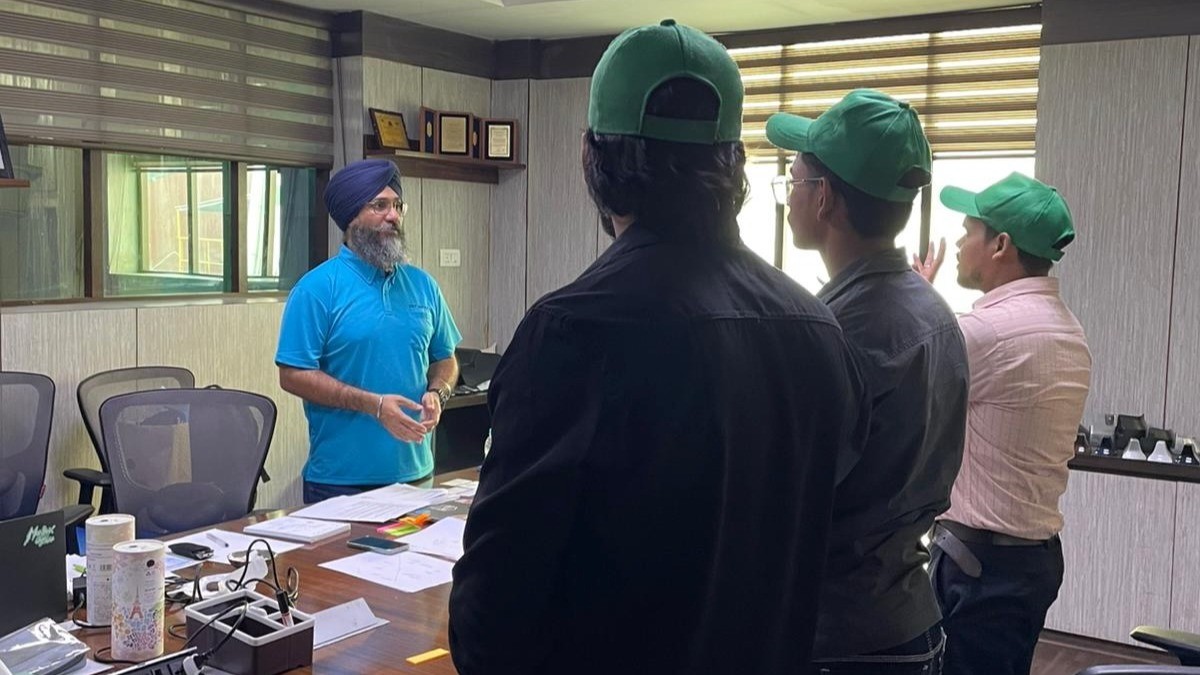
Many companies today are strengthening ESG and Human Rights Due Diligence (HRDD) across their supply chains.
Supplier codes are in place. Audits are being conducted. Reporting expectations continue to grow.
Yet, some of the most serious human rights risks never appear in reports.
Not because companies don’t care. But because many risks don’t live in policies or systems. They live in people’s everyday working lives.
At World of Gears our work is rooted in implementing ESG and HRDD on the ground—inside factories, farms, and supply chains across India. Our learning comes from direct rightsholder engagement with suppliers, not from desk-based analysis or reporting alone.
What follows is lived experience: what actually works, what often fails, and what experienced companies do differently.
From our experience, most human rights risks do not surface through audits or management systems. They surface when companies engage directly with rightsholders at suppliers, including:
Across sectors, we consistently observe a gap:
the gap between what global companies believe is happening and what rightsholders actually experience.
This gap is rarely about bad intent. It is usually about distance from lived reality.
For example, many suppliers have grievance mechanisms in place—posters, phone numbers, committees. But when we engage directly with workers, we often hear:
No audit captures this. Only rightsholder engagement does.
When rightsholders are not meaningfully engaged, companies end up managing perceived risk instead of actual risk.
Where engagement is done well, we see:
Without rightsholder engagement, especially in complex contexts like India, HRDD remains incomplete.
India is not unwilling. It is complex!
One of the strongest lessons from implementation is that HRDD works through vulnerability, not averages.
On the ground, vulnerabilities often overlap:
A migrant woman working on a short-term contract is not a single risk factor. She represents multiple, layered vulnerabilities.
Effective rightsholder engagement therefore starts with understanding who the rightsholders are, not just where the supplier is located.
In practice, rightsholder engagement fails when suppliers experience the process as policing or fault-finding.
This is not an audit. It must be positioned as a learning and capability-building process—for buyers, suppliers, and rightsholders alike.
Suppliers often have strong local relationships. These relationships are valuable and should be used responsibly. At the same time, clear boundaries around privacy, confidentiality, and independence are essential.
This is not about language translation. It is about cultural and social interpretation—understanding power dynamics, hierarchy, and trust.
Implementation experience also teaches you to plan for:
Companies that plan for these realities gain deeper insight and more reliable data. Those that don’t often underestimate time, cost, and risk.
These practices come directly from hands-on ESG and HRDD implementation.
Gender matters. Women workers are often more open when women facilitators are present.
Balanced teams are not symbolic. They directly affect the quality and depth of engagement.
Equally important is the setting—neutral, familiar spaces such as break areas or shaded outdoor spaces, often outside production time. Context influences trust.
Rightsholder engagement is not about extracting information.
Effective engagement focuses on:
Sometimes rightsholders map expenses. Sometimes they identify practical improvements themselves.
In practice, engagement may involve sitting under trees, sharing food, listening patiently, and allowing conversations to unfold naturally.
This is not compliance theatre. This is how trust is built in real supply chains.
One of the fastest ways to damage trust is to ask rightsholders to speak—and then do nothing.
You don’t need perfect solutions. You need:
From experience, even limited follow-through—when clearly communicated—strengthens credibility significantly.
“What if engagement exposes workers to retaliation?” → Engage rightsholders in groups → Avoid naming individuals → Use neutral facilitators → Move slower where buyer leverage is limited
“What if suppliers are approached by multiple buyers?” → Coordinate engagement where possible → Start with visits and listening, not demands → Keep interactions short and respectful (20–30 minutes is often effective)
“What if changes are costly or disruptive?” → Many risks relate to supervision, communication, and management practices—not capital investment → Where costs exist, sequencing and prioritisation matter
“What if engagement complicates operations?” → Implementation experience shows complexity already exists—it is simply unspoken → Good engagement reduces future disruption and escalation
In practice, experienced companies usually begin with:
From lived experience implementing ESG and HRDD, meaningful rightsholder engagement at suppliers is not about perfect tools or frameworks.
It is about:
When done well, rightsholder engagement does not increase risk.
It reduces it—and becomes a strategic strength for companies operating complex supply chains in India.
If your organisation is moving from ESG and HRDD “on paper” to on the ground—especially when engaging rightsholders at suppliers in India—this transition deserves care, realism, and local insight.

Your ESG goals are clear, but ground-level execution is stalled. Get the on-the-ground expertise to translate your vision into tangible actions and lasting change.
Book a Discovery Session
.png)


